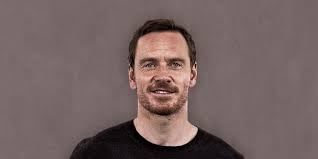
Michael Fassbender became a star by taking the hard route. He did not rise through celebrity gossip, teenage fame, or one lucky franchise. He built his name through training, risk, physical commitment, and a long stretch of roles that asked more from him than simple charm. His career moved from television work and small parts to major films such as Hunger, Shame, Inglourious Basterds, X-Men: First Class, 12 Years a Slave, Steve Jobs, The Killer, and Black Bag. That range explains why he is hard to place in one category. He can carry a quiet art film, sharpen a Hollywood blockbuster, or turn a historical character into someone difficult to watch and hard to forget.
Fassbender’s star image rests on tension. He often plays men who look controlled from the outside but are being pulled apart underneath. That quality did not appear by accident. It came from a mixed cultural background, a serious acting education, years of ordinary work, and a willingness to take roles that could have made him seem too cold, too intense, or too difficult for mainstream fame. Instead, those choices became his signature.
From Germany to Ireland, and the Making of an Outsider
Michael Fassbender was born in Heidelberg, Germany, in 1977, to a German father and an Irish mother. He moved to Ireland as a child and grew up in Killarney, County Kerry. That mixed background matters because Fassbender never felt like an actor tied to one obvious screen identity. He could play Irish, German, British, American, historical, modern, heroic, cruel, restrained, or unstable without seeming trapped in one box.
His early life gave him a natural sense of movement between cultures. Germany and Ireland are not just two locations in his biography. They gave him different rhythms. German discipline and Irish storytelling became useful parts of his acting identity. That does not mean every role he played came from his childhood, but it helps explain his screen presence. Fassbender often appears like someone who belongs and does not belong at the same time.
That outsider quality became one of his strengths. Many leading actors depend on warmth, openness, or easy familiarity. Fassbender built something sharper. He learned how to hold back. He learned how to make silence feel active. He learned how to suggest history without explaining every emotion. That kind of acting works well in films where the audience must study the character rather than simply like him.
Fassbender did not grow up as a Hollywood product. He was not shaped by Los Angeles expectations, studio grooming, or early tabloid fame. His road began in local life, school drama, and the slow discovery that performance could become more than a hobby. He has spoken in interviews about being drawn to acting as a teenager, and that early pull led him away from a conventional path.
The useful thing about Fassbender’s background is that it did not give him a ready-made star personality. He had to build one through work. That is why his career feels earned. Viewers did not see him as a polished celebrity first. They met him through roles that forced attention.
The Training Years Before Anyone Called Him a Star
Fassbender studied at Drama Centre London, a school known for demanding actor training. That period gave him a foundation in physical control, voice, character work, and psychological detail. The school’s reputation fits the kind of actor he became. Fassbender rarely seems casual on screen. Even when he plays relaxed characters, there is usually pressure behind the eyes.
Training alone does not make a star, but it can shape how an actor survives difficult roles. Fassbender’s later work required discipline. In Hunger, he had to transform his body and sit inside long stretches of silence. In Shame, he had to play addiction without hiding behind speeches. In Steve Jobs, he had to carry fast, dense dialogue while playing a public figure known for intelligence, ego, and control. Those performances needed more than instinct. They needed craft.
Before major film success, Fassbender worked his way through television, stage, and supporting roles. He appeared in Band of Brothers, which gave him early screen exposure, but it did not make him famous. He also appeared in projects such as Hex and continued searching for the roles that would move him forward. This was the unglamorous part of the career, the stretch where an actor works, learns, gets rejected, and keeps going.
Those early years matter because they kept him from becoming too polished too soon. Fassbender did not arrive with the smoothness of someone protected by fame. He arrived with hunger. He looked like someone who had waited for the right role and knew what to do when it came.
Many actors want a breakthrough before they are ready for it. Fassbender’s breakthrough came after enough training and frustration to make it useful. By the time directors began noticing him, he had the technical tools to handle difficult material. He also had the nerve to accept roles that did not promise easy approval.
That nerve became a pattern. Fassbender did not seem interested in becoming only handsome, charming, or heroic. He could use those qualities, but he often twisted them. His characters might be attractive, but they are rarely simple. They might be powerful, but they are often damaged. They might seem calm, but the calm is usually temporary.
The First Big Visibility, and Why 300 Was Not the Real Breakthrough
Fassbender gained wider visibility with 300, Zack Snyder’s stylized action film about Spartan warriors. He played Stelios, a supporting role that gave him physical presence, memorable lines, and exposure to a large audience. For many viewers, this was the first time they noticed him.
That kind of role can help an actor, but it can also trap him. A film like 300 rewards bodies, poses, and bold visual energy. It does not necessarily prove emotional range. Fassbender could have been remembered as another strong supporting face in a loud commercial film. He used visibility without letting it define him.
The difference between being seen and being taken seriously is important in Fassbender’s career. 300 made him visible. Hunger made him unavoidable. One gave him attention. The other gave him artistic weight.
That transition shows how carefully his career began to form. He did not reject commercial cinema. Later, he would join the X-Men franchise and play Magneto, one of the most recognizable comic book characters in modern film. But he also understood that star power needs depth if it is going to last. Physical presence can open a door. Serious work keeps it open.
Fassbender’s physicality became part of his appeal, but not in the empty way action films sometimes use actors. He moves like someone who understands the body as a storytelling tool. He can stand still and create tension. He can make a small facial shift carry more weight than a speech. That control came through most clearly once he entered more demanding dramatic roles.
300 also showed another useful part of his screen identity: confidence without softness. Fassbender could be bold without seeming playful. He could project danger without shouting. That made him valuable to directors looking for actors who could hold the frame with minimal movement.
Still, 300 was only a beginning. It gave him a public step forward, but the real turning point came when Steve McQueen cast him as Bobby Sands.
Hunger, the Role That Changed Everything
Hunger changed Michael Fassbender’s career because it showed what he was willing to give to a role. Directed by Steve McQueen, the film tells the story of Bobby Sands, the Irish republican prisoner who died after a hunger strike in 1981. Fassbender’s performance was physically extreme, emotionally controlled, and deeply uncomfortable to watch.
The role demanded a kind of commitment that can easily become a gimmick if the acting underneath is weak. Fassbender’s performance did not rely only on weight loss or physical suffering. The power came from restraint. He did not beg the audience for sympathy. He let the character’s conviction, pain, and stubbornness sit in the room.
The famous long conversation scene between Bobby Sands and a priest became one of the key moments of Fassbender’s rise. The scene depends on language, rhythm, belief, and stillness. There is no easy escape for the actor. He has to hold attention through thought. Fassbender did exactly that.
That performance told filmmakers something clear: he could carry difficult material without softening it. He could play a man driven by political and spiritual force without turning him into a simple symbol. He could let the audience feel discomfort instead of smoothing it away.
Hunger also began one of the most important creative relationships of Fassbender’s career. His work with Steve McQueen continued with Shame and 12 Years a Slave. Across those films, McQueen used Fassbender’s ability to hold contradictions. In one film, he played a prisoner destroying his body for a cause. In another, he played a man consumed by private addiction. In another, he played a slave owner whose cruelty exposed the sickness of power.
That range is not comfortable, but it is central to why Fassbender became respected. He did not build his name by asking audiences to admire him. He built it by asking them to watch carefully.
After Hunger, critics and directors saw him differently. He was no longer just a promising actor with a strong look. He was someone capable of going into dangerous territory and staying there.
The Risky Middle Years, When He Built His Reputation
The period after Hunger could have gone in many directions. Fassbender could have chased safe leading roles or repeated the same kind of intense performance until it became predictable. Instead, he took a run of projects that expanded his image.
He appeared in Quentin Tarantino’s Inglourious Basterds as Lieutenant Archie Hicox, a British officer involved in one of the film’s most tense sequences. The role was not huge, but it was precise. Fassbender brought wit, control, and danger into a scene built around language and hidden identity. Tarantino’s dialogue can expose weak actors because every pause matters. Fassbender fit the rhythm.
He then appeared in Fish Tank, Andrea Arnold’s raw British drama, where he played Connor, a charming but morally troubling figure. The role showed another side of him. Fassbender could make warmth feel suspicious. He could draw people in while keeping something hidden. That became one of his most useful screen qualities.
In Jane Eyre, he played Rochester, a classic literary role that can easily become stiff or overly romantic. Fassbender gave him weight, secrecy, and emotional damage. He did not play romance as decoration. He played it as pressure.
Then came Shame, another Steve McQueen film and one of Fassbender’s defining performances. He played Brandon, a New York man with a sex addiction and a life organized around control, secrecy, and emotional distance. The role required exposure, but the real challenge was internal. Fassbender had to show a man trapped in repetition without turning him into a case study.
Shame worked because Fassbender avoided easy explanation. He did not tell the audience what to feel. He showed routine, loneliness, compulsion, irritation, and collapse. The performance was cold on the surface and painful underneath. That balance became one of the clearest examples of his acting style.
He also appeared in A Dangerous Method, playing Carl Jung opposite Viggo Mortensen and Keira Knightley. The film asked for intellectual tension rather than physical transformation. Fassbender’s Jung was ambitious, curious, and morally uncertain. Again, the role suited his interest in men who are not fully honest with themselves.
During this stretch, Fassbender became one of the most interesting actors of his generation because he kept choosing parts that carried risk. He did not protect himself from being disliked. He did not need every character to be heroic. He seemed more interested in what people hide, what they want, and what they do when control fails.
That is how respect became stardom. The audience did not just recognize his face. They began to expect a certain level of intensity when his name appeared on a poster.
Hollywood Learns How to Use Him
Fassbender’s move into larger Hollywood films did not erase his earlier identity. It widened it. The key role was Erik Lehnsherr, also known as Magneto, in X-Men: First Class. He took over a character already made famous by Ian McKellen, which was not a simple task. Fassbender had to honor the character’s history while making the younger version feel urgent.
His Magneto worked because he did not play him as a simple villain. He played him as a survivor shaped by trauma, anger, intelligence, and moral certainty. The character’s power came from pain. Fassbender made that pain visible without weakening the role.
The X-Men films gave him global recognition. They also proved he could operate inside a franchise without disappearing into it. Some actors become smaller in large studio films because the machinery around them is too loud. Fassbender stayed sharp. He gave Magneto elegance, fury, and wounded pride.
That combination helped him reach viewers who may not have seen Hunger or Shame. Suddenly, he was not only a serious actor admired by critics. He was a familiar face in a major commercial series. That balance is rare. Many actors lean too far toward prestige or too far toward franchise work. Fassbender moved between them with unusual confidence.
Then came 12 Years a Slave, another major turning point. He played Edwin Epps, a brutal slave owner, in Steve McQueen’s film based on Solomon Northup’s memoir. The performance was ugly, frightening, and difficult. Fassbender did not soften Epps into a theatrical villain. He showed cruelty as unstable, petty, sexual, religious, and ordinary. That made the character harder to dismiss.
His work in 12 Years a Slave earned him an Academy Award nomination for Best Supporting Actor. Later, his performance in Steve Jobs earned him an Academy Award nomination for Best Actor. Those two nominations confirmed his place among the most serious film actors of his era.
Steve Jobs was a different kind of challenge. Fassbender did not look exactly like Jobs, and the film did not depend on simple imitation. It depended on rhythm, argument, ego, and pressure. Written by Aaron Sorkin and directed by Danny Boyle, the film placed Fassbender in long, sharp exchanges where language moved like a weapon.
Fassbender made Jobs feel driven, cruel, funny, frightened, and brilliant without asking the audience to approve of him. That is one reason the performance holds up. He did not flatten Jobs into a genius myth. He played the cost of being that kind of person.
By this point, Fassbender had built a rare career shape. He had blockbuster recognition through X-Men. He had awards attention through 12 Years a Slave and Steve Jobs. He had art-film credibility through Hunger and Shame. He had literary and historical range through Jane Eyre, Macbeth, and A Dangerous Method. Few actors move through those lanes without losing identity.
Fassbender’s identity stayed clear because his performances shared a common thread: pressure. Whether he played a mutant leader, a tech founder, a prisoner, a slave owner, or a damaged urban professional, he found the pressure point in the character and held it.
The Pause, the Racing Years, and the Return
Fassbender’s career also includes something many modern stars avoid: absence. He stepped back from constant acting and spent more time on personal life and auto racing. That pause changed the way audiences saw him. He was not everywhere. He did not seem desperate to keep attention. His absence made his return more interesting.
That choice fits his public image. Fassbender has never seemed like an actor built for nonstop celebrity performance. He does not rely on constant visibility to stay relevant. His work carries enough force that even a quieter period does not erase him.
His return with David Fincher’s The Killer in 2023 reminded viewers of what he does best. The film follows a professional assassin after a failed job, and Fassbender plays him with extreme control. The character speaks often in voiceover, but the performance depends on discipline, routine, and tiny cracks in self-command. Netflix describes the story as an assassin fighting his employers and himself after a failed hit.
The Killer suited Fassbender because it turned restraint into action. The character does not explode emotionally. He repeats rules. He watches. He calculates. He tries to convince himself that nothing is personal. Fassbender made that coldness readable without overplaying it.
Then came Black Bag, Steven Soderbergh’s 2025 spy thriller with Cate Blanchett. Fassbender plays George Woodhouse, an intelligence officer investigating suspected betrayal, including suspicion around his own wife. The film placed him back in adult, dialogue-driven cinema, the kind built around loyalty, secrecy, marriage, and professional control.
That role again matched his strengths. Fassbender is convincing as a man who measures every word. He can make politeness feel dangerous. He can sit across a table, speak calmly, and still suggest that something violent may happen beneath the surface. In another actor’s hands, that kind of control can feel empty. With Fassbender, it feels loaded.
There is something almost old-fashioned about his stardom. He does not need to appear friendly in every role. He does not need to be loved in every scene. He comes from the tradition of actors who make tension watchable. His face can carry intelligence, suspicion, arrogance, shame, and grief without much movement.
That quality also explains why directors keep using him in stories about power. Power interests Fassbender as an actor because it can break in many ways. Magneto has supernatural powers but is trapped by trauma. Steve Jobs has corporate and intellectual power but damages people around him. Edwin Epps has legal and physical power inside a monstrous system. Brandon in Shame seems socially functional but cannot govern his own private life. George in Black Bag has professional authority but must question the person closest to him.
Fassbender’s best roles understand that power is not the same as freedom. That idea sits under much of his career.
Why Fassbender Became the Star He Is Today
Michael Fassbender became the star he is today because he combined craft with risk. He did not build a career out of comfort. He chose roles that required physical change, moral ugliness, emotional exposure, and intellectual speed. He also knew when to enter commercial cinema without letting it soften his edge.
His path shows that modern stardom does not always come from being universally likable. Sometimes it comes from being necessary. Fassbender became necessary to certain kinds of films because he could bring danger, thought, and silence into the same frame.
His rise also shows the value of patience. The early years gave him training. The supporting roles gave him visibility. Hunger gave him credibility. Shame gave him a defining style. X-Men gave him a reach. 12 Years a Slave and Steve Jobs gave him awards recognition. The Killer and Black Bag showed that his screen presence still works after time away.
Fassbender’s career has not been perfect, and that also makes it more interesting. Some films missed. Some choices did not land. Some projects gave him less than he gave them. But the core of his reputation survived because it was built on performances, not hype.
That is why he remains compelling. He feels like an actor first and a celebrity second. He can sit at wood restaurant tables in a quiet spy scene, stand in the middle of a comic book spectacle, or disappear into a painful historical drama, and still bring the same charge: a sense that the character is holding something back until the moment he cannot.
Fassbender’s stardom comes from that pressure. He learned how to use stillness. He learned how to let discomfort live on screen. He learned how to make intelligence dramatic and silence active. Most of all, he built a career around choices that asked the audience to pay attention.
That is the real story of how Michael Fassbender became the star he is today. Not through one role, one franchise, or one awards season, but through a long chain of demanding performances that proved he could carry beauty, cruelty, control, shame, and ambition without making any of them feel simple.