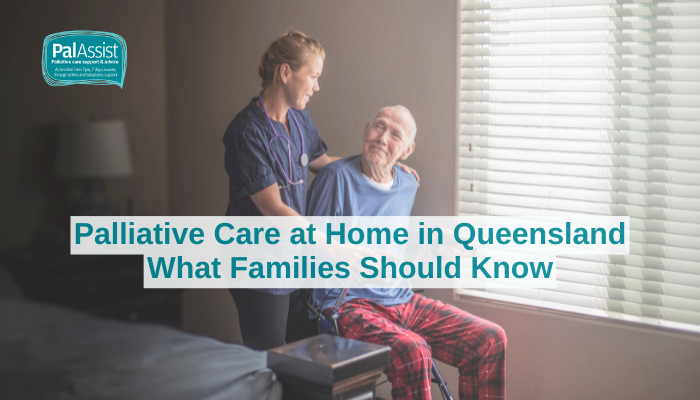
Do you want to keep your loved one with a life-limiting illness comfortable at home? It’s a situation many Queensland families face, and it can feel overwhelming at first.
However, that’s exactly why PalAssist exists. We are a free Queensland Health-funded service, and our team of registered nurses and health professionals supports families and carers right across Queensland.
Palliative care at home is an excellent way to let the patient stay in a safe and familiar place. In the sections ahead, you’ll learn when to start palliative care, how home care works in Queensland, and what support is available for your whole family.
First, we’ll look at how palliative care at home starts in Queensland for life-limiting illnesses.
Palliative Care at Home Queensland for Life Limiting Illness: When and How It Starts
Palliative care at home in Queensland can begin as soon as your loved one receives a life-limiting diagnosis. You don’t need to wait until the final weeks to start getting support.

Here is what you can expect and how to get started.
What Palliative Care Means
Palliative care is specialised support for anyone living with a life-limiting illness. The Queensland Government describes it as healthcare that focuses on improving the quality of life and care of people with a life-limiting illness, and their families.
In practice, this means caring for the whole person. Your care recipient will receive help with physical symptoms like pain and breathlessness, along with emotional and spiritual support. ‘
The care also extends to the family through guidance, respite support, and practical help. That means carers aren’t left to manage everything alone and feel better supported day to day.
When Should Palliative Care Begin?
As we mentioned earlier, palliative care can start right from the point of diagnosis. Unfortunately, a lot of families believe palliative care is only for the final days.
In reality, starting early can give your loved one more time to benefit from pain relief, emotional support, and well-coordinated medical care. It’ll also give your family more time to plan, ask questions, and feel prepared for what lies ahead.
So if the symptoms are affecting daily life, or if you simply want a better idea of the support available, that’s a good time to speak with your GP about a referral.
The Role of the Palliative Care Team and Health Professionals
A palliative care team is a group of health professionals who each play a different part in your relative’s care. The team may include doctors, nurses, social workers, physiotherapists, dietitians, and counsellors.
What makes the team so valuable is how they work together. They’ll build a care plan around their individual needs and preferences. For instance, if pain management is their biggest concern, the team will adjust medications and monitor comfort levels. On the other hand, if emotional well-being is their priority, counsellors and social workers will step in to help.
And as we mentioned, this support extends to families and carers too. Looking after someone with a serious illness affects everyone involved, after all. Your palliative care team understands that, and they’ll be there for the whole family.
What Services Are Included in Home Care
Home care covers a wide range of palliative care services, and many of them come at little or no cost through Queensland Health. Take a closer look at what your family can expect:
- Pain and Symptom Management: Your palliative care team will monitor and adjust medications so your family member stays comfortable. Their goal is to reduce pain and help them stay as independent as possible at home.
- Emotional and Psychological Support: Counsellors and social workers will provide emotional care for both patients and families. They can help you cope with grief, stress, and the demands of caregiving, so you don’t have to carry it all on your own.
- Support for Carers: If you need practical support for daily care tasks, respite options, or ways to look after your own wellbeing, community nurses and allied health professionals can guide you through each step. This support can ease the pressure during a difficult time.
- Links to End of Life Care Queensland Health: Your care team can also connect you with additional end-of-life care resources. One example is the MASS Palliative Care Equipment Program, which lends aids and equipment for up to 6 months to help your loved one stay comfortable at home.
Based on our experience supporting Queensland families, the earlier you connect with these services, the smoother the move to home care will be. And if you are not sure where to begin, our team can point you toward the right local services.
Home Care vs. Hospital Care
Staying at home will give the patient something a hospital room cannot offer: familiar surroundings, their own bed, and the people they love close by. For many, home care also means fewer trips to the hospital and less time sitting in waiting rooms. Along with that comfort, home care puts more control in your hands as well.
You and your loved one can manage daily routines, mealtimes, and visitors around what feels right, rather than following a hospital schedule. That sense of dignity and choice can help them feel more settled and respected during a difficult time.
However, care needs can change over time. So if they suddenly need more support than home care can provide, options like respite care, hospice, or a short hospital stay are available. These services will give your family time and support to adjust while making sure the care recipient continues to receive proper care.
In-Home Palliative Care in Brisbane: What to Expect and How to Plan Ahead
If you are looking into in-home palliative care in Brisbane, the process is actually straightforward. And with the right support, you can create a plan that keeps your loved one comfortable and cared for at home.

This is how it works in practice.
How to Access Palliative Care Services in Brisbane North and Beyond
The most common way to access palliative care services in Brisbane is through a referral from your GP. Your doctor can connect you with community palliative care teams across Brisbane North and the wider region.
But if the patient is already in a hospital, the discharge team can arrange a referral before they come home. Metro North Health, for example, covers areas from Caboolture down to the Brisbane River, with community services reaching toward the Sunshine Coast.
And if your family is outside Brisbane, you can still access local palliative care support through your GP or by calling us on 1800 772 273.
Step by Step: The Care Process at Home
Once your loved one is referred to a palliative care service, the team will follow a structured process to make sure the right support is in place from the start. Here is what that looks like at each stage.
Step 1: Assessment of Care Needs
A nurse or health professional will visit your home to look at the patient’s physical, emotional, and practical needs. During the same visit, they’ll also check in on how your family is coping, since, if you remember, the goal is to support everyone involved.
Step 2: Creation of a Personalised Care Plan
From there, the palliative care team will put together a care plan built around your loved one’s individual needs and preferences. The plan will cover pain management, emotional support, daily care needs, and guidance for the family. And it’ll always be guided by what’s best for your family.
Step 3: Regular Visits from the Palliative Care Team
With the plan in place, community nurses and allied health professionals begin visiting on a schedule that fits their condition. Early on, this may mean weekly check-ins, since needs are usually more stable at that stage. As care needs increase over time, visits can become more frequent to provide the right level of support.
Step 4: Ongoing Adjustments
Finally, as their condition progresses, their needs will naturally change, and the care plan should adjust right along with them. The palliative care team will continue to stay in close contact with your GP throughout to make sure medications, equipment, and support all stay up to date.
Advance Care Planning and Making Wishes Known
Advance care planning gives your loved one a way to record their values, preferences, and wishes for future health care while they are still able to do so. In Queensland, this is usually done through an Advance Health Directive, which is a legally recognised document. It explains what treatments a person agrees to or refuses if they can no longer make decisions.
This also means they can choose to refuse certain treatments in advance. That decision will be legally respected and is known as an “advance refusal of treatment” within the directive.
Believe it or not, starting these conversations early can ease pressure on the whole family. Through our experience supporting Queensland families, we have seen how much reassurance advance care planning brings when everyone knows what your loved one’s preferences are.
Support Carers Through End-of-Life Care at Home
So, has anything in the article helped you feel a bit more prepared for what lies ahead? If you are supporting a loved one through palliative care at home in Queensland, please know that you have plenty of support available.
There’s even support for carers, like respite, counselling, and hands-on guidance from health professionals available at every step. Palliative care in Queensland also respects the cultural and spiritual needs of every family, including Aboriginal and Torres Strait Islander peoples and culturally and linguistically diverse communities.
At the end of the day, end-of-life care at home is about dignity, comfort, and connection with the people who are most important to you. And if your family needs guidance along the way, we are here for you.
Contact Pal Assist on 1800 772 273 or chat with us online, 7 days a week from 7 am to 7 pm.
Disclaimer
This blog provides general health and product information for educational purposes only. It is not intended to diagnose, treat, or replace advice from your healthcare professional. Always seek guidance from your GP, nurse, continence advisor, or pharmacist regarding your individual needs. If symptoms persist or you’re unsure about product use, consult a qualified healthcare provider.