Over the past two decades, Atlanta has transformed from a regional production hub into one of North America’s most sophisticated filmmaking ecosystems. What began with aggressive tax incentives has evolved into something far more substantial: a creative infrastructure where cutting-edge technology, diverse talent, and narrative innovation converge.
The city’s ascent reflects more than economic opportunism. Atlanta’s film studios have become laboratories for integrating scientific advancement with storytelling craft—from motion capture systems that blur the line between performance and digital creation to virtual production stages that reimagine how directors visualize scenes. These facilities aren’t simply cheaper alternatives to Los Angeles soundstages; they’re pioneering new production methodologies that influence how stories get told globally.
This examination explores how Atlanta established its position in the industry, the economic ripple effects that followed, and the landmark productions that cemented its reputation. We’ll also investigate how science and technology shape creative output in these studios, the storytelling approaches they cultivate, and what trajectory the industry might follow in the coming decade.
How Atlanta Became a Production Powerhouse
Atlanta’s emergence as a filmmaking center wasn’t inevitable. The city lacked the legacy infrastructure of established production hubs, but strategic decisions in the early 2000s created conditions for rapid growth. Georgia’s Entertainment Industry Investment Act, enacted in 2008, offered tax credits covering up to 30% of production costs—among the most generous incentives in the country.
Yet financial incentives alone don’t explain Atlanta’s sustained success. The city offered practical advantages that became increasingly valuable as production budgets tightened:
- Geographic versatility spanning urban architecture, suburban neighborhoods, dense forests, and rural landscapes within a 50-mile radius.
- Significantly lower operating costs compared to coastal production centers, from crew rates to facility rentals.
- A growing pool of experienced below-the-line talent as repeated productions created career pathways for local technicians.
- Proximity to major airports and distribution infrastructure that simplified logistics for national and international productions.
According to analysis from The Hollywood Reporter, Georgia’s film industry generated $4.4 billion in direct spending by 2022, with Atlanta accounting for the majority of that activity. The city’s rise demonstrates how coordinated policy, infrastructure investment, and talent development can reshape regional economies.
Economic Transformation Beyond the Soundstage
The film industry’s economic impact in Atlanta extends well beyond production budgets and studio revenues. The sector has catalyzed growth across multiple industries, creating a diversified economic base that proved resilient even during pandemic-related production shutdowns.
- Employment Ecosystem: The industry supports approximately 40,000 jobs in Georgia, from cinematographers and set designers to catering staff and transportation coordinators. This employment base has reduced regional unemployment and created middle-class career pathways that didn’t exist two decades ago.
- Ancillary Business Growth: Equipment rental houses, post-production facilities, specialized construction firms, and hospitality services have expanded to meet production demands. Many of these businesses now serve clients beyond the film industry, diversifying their revenue streams.
- Real Estate Development: Purpose-built studio complexes have spurred commercial real estate investment, while location shooting has increased property values in frequently filmed neighborhoods.
- Tourism Spillover: Productions like The Walking Dead and Stranger Things have generated tourism interest, with fans visiting filming locations and contributing to local retail and hospitality sectors.
The Motion Picture Association estimates that every dollar spent on film production generates approximately $1.70 in additional economic activity through these multiplier effects. For Atlanta, this has translated into billions in indirect economic impact, fundamentally altering the city’s economic composition.
Productions That Defined Atlanta’s Reputation
Certain productions have served as inflection points in Atlanta’s evolution as a filmmaking center, demonstrating the city’s capacity to support increasingly ambitious projects while showcasing its geographic and technical versatility.
- The Walking Dead (2010-2022): This AMC series established Atlanta as viable for long-running episodic production, proving the city could sustain complex productions over multiple years while maintaining crew quality and location diversity.
- Marvel Cinematic Universe Films: Productions including Ant-Man, Captain America: Civil War, and Black Panther demonstrated Atlanta’s ability to handle blockbuster-scale productions with extensive visual effects requirements and complex logistical demands.
- Stranger Things (2016-present): Netflix’s flagship series showcased Atlanta’s ability to convincingly double for 1980s Indiana, highlighting the production design and location management expertise available in the region.
- Ozark (2017-2022): This Netflix drama used Atlanta-area locations to represent Missouri’s Lake of the Ozarks, further proving the city’s geographic flexibility and production infrastructure depth.
These productions didn’t just bring revenue—they established Atlanta’s reputation for solving complex production challenges. When Backstage surveyed production managers about Atlanta’s strengths, respondents consistently cited crew expertise, location diversity, and problem-solving capacity alongside financial incentives.
Where Science Meets Storytelling
Atlanta’s film studios have become early adopters of production technologies that fundamentally alter how stories get visualized and executed. This technological sophistication has become a competitive advantage, attracting productions that require advanced capabilities.
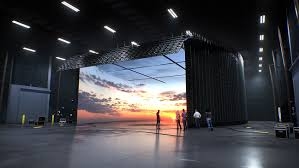
- Virtual Production Stages: Facilities such as Studio Space Atlanta have invested in LED volume stages that leverage real-time rendering technology to create immersive digital environments, enabling directors and production teams to view near-final backgrounds during principal photography rather than waiting for post-production. Popularized by productions such as The Mandalorian, this approach can reduce location-related costs while expanding creative flexibility. Comparable production facilities like Trilith Studios and Tyler Perry Studios have also embraced advanced virtual production technologies to support increasingly sophisticated film and television projects.
- Motion Capture Systems: Advanced motion capture facilities enable performance capture for visual effects-heavy productions, allowing actors to perform in Atlanta while their digital counterparts appear in fantastical environments.
- Computational Cinematography: High-dynamic-range cameras and advanced color science workflows allow cinematographers to capture more visual information, providing greater flexibility in post-production color grading and visual effects integration.
- Cloud-Based Collaboration: Post-production workflows increasingly leverage cloud infrastructure, allowing editors, visual effects artists, and sound designers to collaborate remotely while maintaining high-bandwidth access to source materials.
These technological capabilities don’t simply make production more efficient—they enable narrative approaches that weren’t previously feasible. Virtual production, for instance, allows directors to iterate on environment design during shooting rather than committing to locations months in advance, fundamentally changing the creative process.
Narrative Innovation in Atlanta’s Creative Ecosystem
Beyond technological infrastructure, Atlanta’s film community has cultivated distinctive approaches to storytelling that reflect the city’s cultural composition and creative talent base.
- Diverse Narrative Perspectives: Atlanta’s significant African American population and growing international communities have influenced the stories told and how they’re told. Productions like Atlanta (the FX series) and Black Panther drew on local cultural expertise and talent in ways that shaped their narrative authenticity.
- Collaborative Development Culture: Unlike Los Angeles’s more stratified industry hierarchy, Atlanta’s relatively young film community has fostered more fluid collaboration between writers, directors, and producers, often leading to unconventional narrative structures and creative risk-taking.
- Genre Experimentation: Atlanta studios have become particularly associated with genre-blending productions that resist easy categorization—from Atlanta’s surrealist comedy-drama to Lovecraft Country’s horror-infused historical fiction.
- Character-Driven Narratives: Productions based in Atlanta have shown consistent emphasis on complex character development over plot mechanics, reflecting the influence of Southern literary traditions on local storytelling sensibilities.
This creative environment has attracted writers and directors seeking alternatives to conventional Hollywood development processes. The result is a production ecosystem that values narrative experimentation alongside commercial viability.
What’s Next for Atlanta’s Film Industry
Atlanta’s film industry faces both opportunities and challenges as it matures from upstart competitor to established production center. Several trends will likely shape the next decade:
- Technological Leadership: Continued investment in virtual production, artificial intelligence-assisted workflows, and advanced post-production capabilities could position Atlanta as a technology leader rather than simply a cost-effective alternative.
- Sustainability Initiatives: As environmental concerns influence production decisions, Atlanta studios are implementing sustainable practices—from renewable energy-powered facilities to waste reduction programs—that could become competitive differentiators.
- Talent Development Infrastructure: Expanded film education programs at institutions like SCAD and Georgia State University are creating local talent pipelines that reduce dependence on imported crew members.
- International Co-Productions: Atlanta’s infrastructure and incentives are attracting international productions, potentially positioning the city as a bridge between North American and global markets.
- Streaming Platform Demand: The continued growth of streaming services creates sustained demand for content production, favoring regions like Atlanta that can deliver quality at scale.
However, challenges persist. Competition from other regions offering comparable incentives intensifies annually. Political uncertainty around tax credit programs creates planning difficulties for long-term facility investments. And as production costs rise industry-wide, maintaining cost advantages becomes more difficult.
The industry’s trajectory will depend on whether Atlanta can transition from competing primarily on cost to competing on capability—offering production technologies, creative talent, and problem-solving expertise that justify premium positioning.
Why Atlanta’s Film Industry Matters
Atlanta’s film industry represents more than regional economic development or Hollywood’s geographic diversification. It demonstrates how strategic investment in creative infrastructure can reshape regional economies while influencing global cultural production.
- Cultural Representation: Atlanta-based productions have expanded whose stories get told and how they’re told, bringing perspectives that were underrepresented in traditional production centers.
- Economic Diversification: The film industry has provided Atlanta with economic resilience beyond its traditional corporate and logistics sectors, creating career pathways in creative fields.
- Technological Innovation: Atlanta studios’ adoption of advanced production technologies influences industry-wide practices, accelerating the integration of scientific advancement into creative processes.
- Regional Development Model: Atlanta’s success has inspired other regions to develop film industries, demonstrating how coordinated policy and infrastructure investment can build competitive creative economies.
Whether you’re a filmmaker evaluating production locations, a creative professional considering career opportunities, or simply someone interested in how stories get made, Atlanta’s film industry offers a compelling case study in how technology, policy, and talent converge to reshape cultural production.