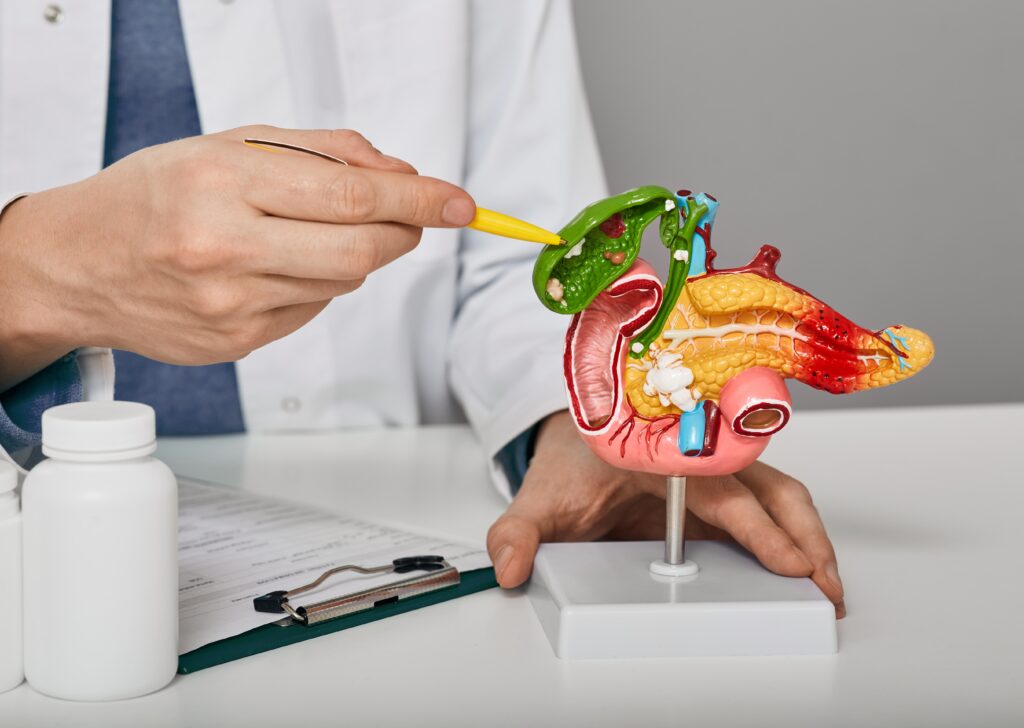
Medicine is never static, and the surgical techniques being used to treat gallbladder disease and lipomas today are already markedly different from those of twenty years ago — and those of twenty years hence will likely be different again in ways that are difficult to fully anticipate. Dubai, as a city with a deep institutional commitment to healthcare innovation and technology adoption, is uniquely positioned to be at the forefront of the next generation of surgical advances. For patients currently considering Gallbladder Surgery Dubai or Lipoma Surgery Dubai, understanding the direction in which the field is heading can provide both reassurance about the present state of care and excitement about the continuing improvements that lie ahead.
Single-Incision Laparoscopic Surgery: One Step Closer to Invisible Scars
Standard laparoscopic cholecystectomy requires three to four small incisions in the abdomen, each typically measuring five to twelve millimetres in length. Single-incision laparoscopic surgery — also known as SILS or LESS — performs the entire procedure through a single incision, usually placed within the navel, resulting in a scar that is largely hidden within the natural contours of the umbilicus and often virtually invisible once healed. This technique is technically more demanding than standard laparoscopy, requiring specialised equipment and a higher level of surgical skill to manage the reduced working angles and instrument crowding inherent in the single-port approach. Dubai’s most advanced surgical centres are already offering SILS cholecystectomy to carefully selected patients, and as experience and equipment continue to evolve, this approach is expected to become more widely available.
Natural Orifice Transluminal Endoscopic Surgery: Scarless Surgery Becomes Reality
In the category of what might have seemed like science fiction only two decades ago, natural orifice transluminal endoscopic surgery — NOTES — involves performing intra-abdominal operations through the body’s natural openings, such as the mouth, stomach wall, vagina, or rectum, entirely eliminating external incisions and their associated scarring. NOTES cholecystectomy has been performed successfully in specialised centres worldwide, though it remains a highly experimental approach that has not yet achieved widespread clinical adoption due to technical complexity, access limitations, and questions about safety in broader patient populations. Dubai’s research-oriented surgical community closely follows developments in this field, and it is possible that as technique and equipment continue to mature, NOTES procedures will transition from experimental to clinical practice in selected cases.
Artificial Intelligence in Surgical Planning and Intraoperative Navigation
Artificial intelligence is beginning to find meaningful applications throughout the surgical workflow, from pre-operative imaging analysis and risk stratification to real-time intraoperative guidance systems that can identify anatomical structures with a degree of consistency and reliability that complements the experienced surgeon’s judgment. AI-powered imaging analysis can process preoperative CT and MRI scans to create detailed three-dimensional reconstructions of a patient’s specific biliary and vascular anatomy, alerting the surgical team to anatomical variations that might increase the risk of complication if not anticipated. Intraoperative AI systems that analyse the laparoscopic video feed in real time — alerting the surgeon when the critical view of safety has been achieved or flagging proximity to at-risk structures — are being evaluated in clinical trials and represent a significant potential advance in surgical safety.
Injectable and Minimally Invasive Lipoma Treatments Under Investigation
Researchers are actively investigating non-surgical approaches to lipoma treatment that would eliminate the need for even the small incisions required for traditional excision. Injection lipolysis — the direct injection of a lipolytic agent such as deoxycholic acid or phosphatidylcholine into the lipoma — has shown promise in early studies as a method of gradually reducing lipoma volume without surgery. While the technique is not yet approved or widely available for lipoma treatment, early results are sufficiently encouraging to sustain active clinical investigation. For patients who are particularly concerned about surgical risk or scarring, the prospect of an effective injection-based treatment represents an exciting potential future option, though surgical excision remains the current gold standard for definitive lipoma removal.
Enhanced Recovery After Surgery Protocols: Transforming the Postoperative Experience
Enhanced Recovery After Surgery — or ERAS — protocols represent one of the most significant and widely adopted improvements in surgical practice of the past two decades. ERAS programmes are multimodal perioperative care pathways that combine evidence-based interventions across the pre-operative, intraoperative, and postoperative phases of care to accelerate recovery, reduce complications, and shorten hospital stays. Elements of ERAS protocols relevant to gallbladder surgery include carbohydrate loading before surgery rather than prolonged fasting, minimally invasive surgical technique, targeted rather than routine use of anaesthetic agents, early mobilisation after surgery, and rapid progression of oral intake. Dubai’s major hospitals are increasingly implementing comprehensive ERAS pathways, and the results in terms of reduced length of stay and improved patient-reported recovery experiences have been impressive.
Dubai’s Strategic Investment in the Future of Surgical Healthcare
The advances described in this article are not happening in isolation from Dubai’s broader healthcare vision. The UAE government’s commitment to making Dubai a global healthcare hub — codified in strategic plans that allocate significant funding to research, infrastructure, and talent development in the medical sector — creates the institutional environment in which surgical innovation can flourish. Dubai’s partnership with leading international academic medical centres, its investment in clinical research infrastructure, and its competitive environment that attracts and rewards the most talented surgical minds in the world all contribute to a future in which the quality of gallbladder and lipoma surgery available in the city will continue to improve, becoming ever safer, less invasive, and more effective for every patient who passes through its operating theatres.